ADNOC’s Umm Shaif FID: A Strategic Milestone for Gas Sovereignty and AI Infrastructure
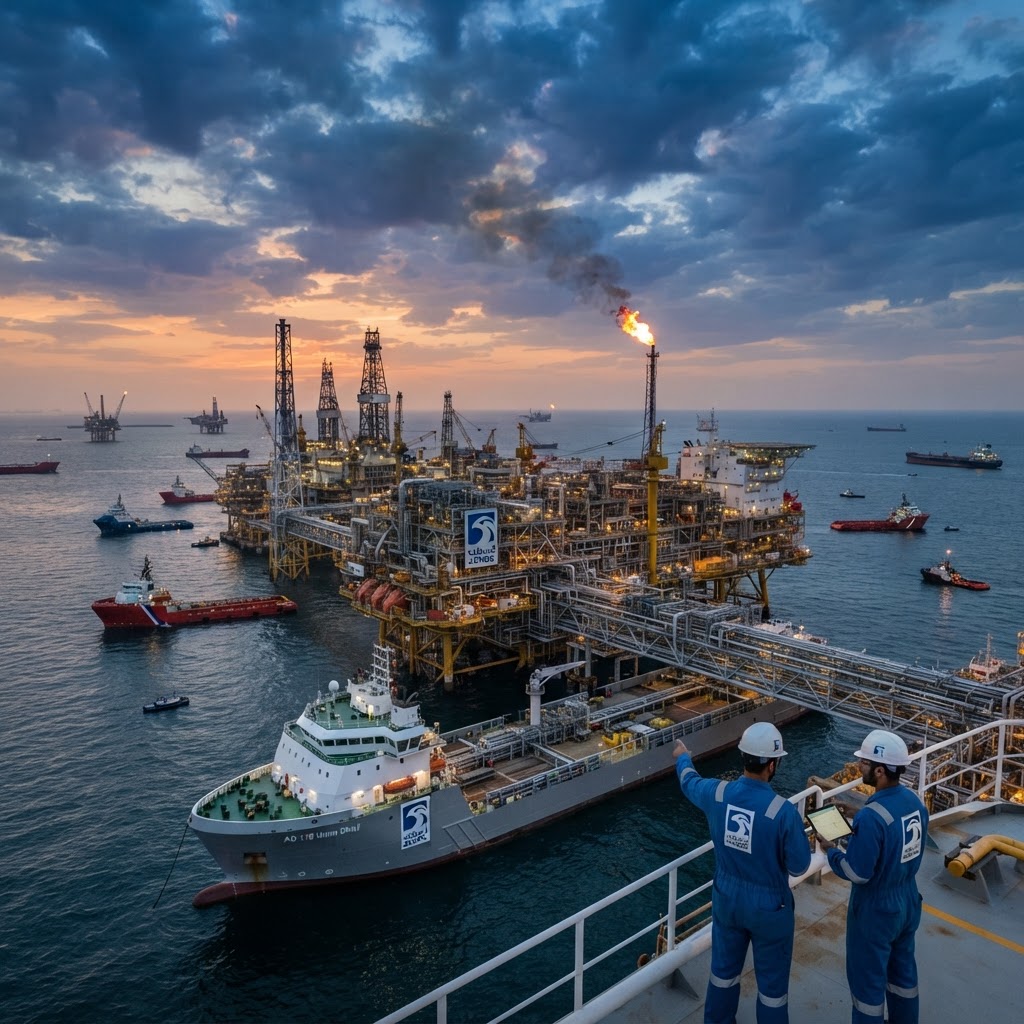
ADNOC’s $6.2 billion final investment decision for the Umm Shaif Gas Cap signals a massive shift in how Middle Eastern giants are linking upstream capacity to the burgeoning demands of digital infrastructure and industrial self-sufficiency.
The Convergence of Upstream Strategy and Digital Demand
In the global energy landscape, few announcements carry as much weight as a multi-billion dollar Final Investment Decision (FID) from Abu Dhabi National Oil Company (ADNOC). The recent $6.2 billion approval for the Umm Shaif Gas Cap development is not merely an expansion of production; it is a calculated response to the shifting pillars of the Middle Eastern economy. As consultants, we view this through the lens of integrated energy systems, where gas production is increasingly tethered to the high-intensity power requirements of the UAE’s industrial growth and its burgeoning AI and data center infrastructure.
Engineering Complexity and the Lean Execution Model
From an engineering perspective, Umm Shaif presents a fascinating case of brownfield optimization. One of Abu Dhabi’s oldest producing assets, discovered in 1958, the field is now being revitalized to tap into the gas cap overlying its oil reservoir. The project involves three massive Engineering, Procurement, and Construction (EPC) packages totaling $5.1 billion. For a project of this scale, the risk management of offshore infrastructure delivery is paramount. We are seeing a move toward more integrated drilling services—highlighted by ADNOC Drilling’s $365 million role—which reduces mobilization lag and increases asset utilization. For operators and investors, this ‘one-team’ approach to project delivery is the gold standard for controlling costs in a market where lead times for critical equipment are stretching.
The Strategic Pivot to Gas Sovereignty
The Umm Shaif project, expected to deliver over 600 million standard cubic feet per day by 2030, represents nearly 10% of the UAE’s current daily gas consumption. This is a critical step toward the nation’s gas self-sufficiency goals. At Atticus Energy, we often advise clients that energy security is no longer just about volume; it is about the reliability of feedstock for the next generation of industry. By securing domestic gas, the UAE insulates itself from the volatility of the global spot market, providing a stable foundation for its downstream petrochemical clusters and the massive power demand of AI clusters. This alignment of energy policy with high-tech industrial policy is a blueprint that other resource-rich nations are watching closely.
Looking Ahead: Managed Transition and Global Partnerships
The involvement of international majors like TotalEnergies, Eni, and CNPC underscores the continued attractiveness of low-cost, low-carbon-intensity barrels in the Middle East. For the strategic advisor, the lesson here is clear: capital is flowing toward projects that demonstrate both scale and technological integration. As we look toward 2030, the success of Umm Shaif will depend on the lean engineering principles applied during the current execution phase. The ability to deliver these offshore packages on time and within budget will be the true litmus test for ADNOC’s integrated gas strategy.