The AI Imperative: Moving Beyond Pilots in Middle Eastern Asset Management
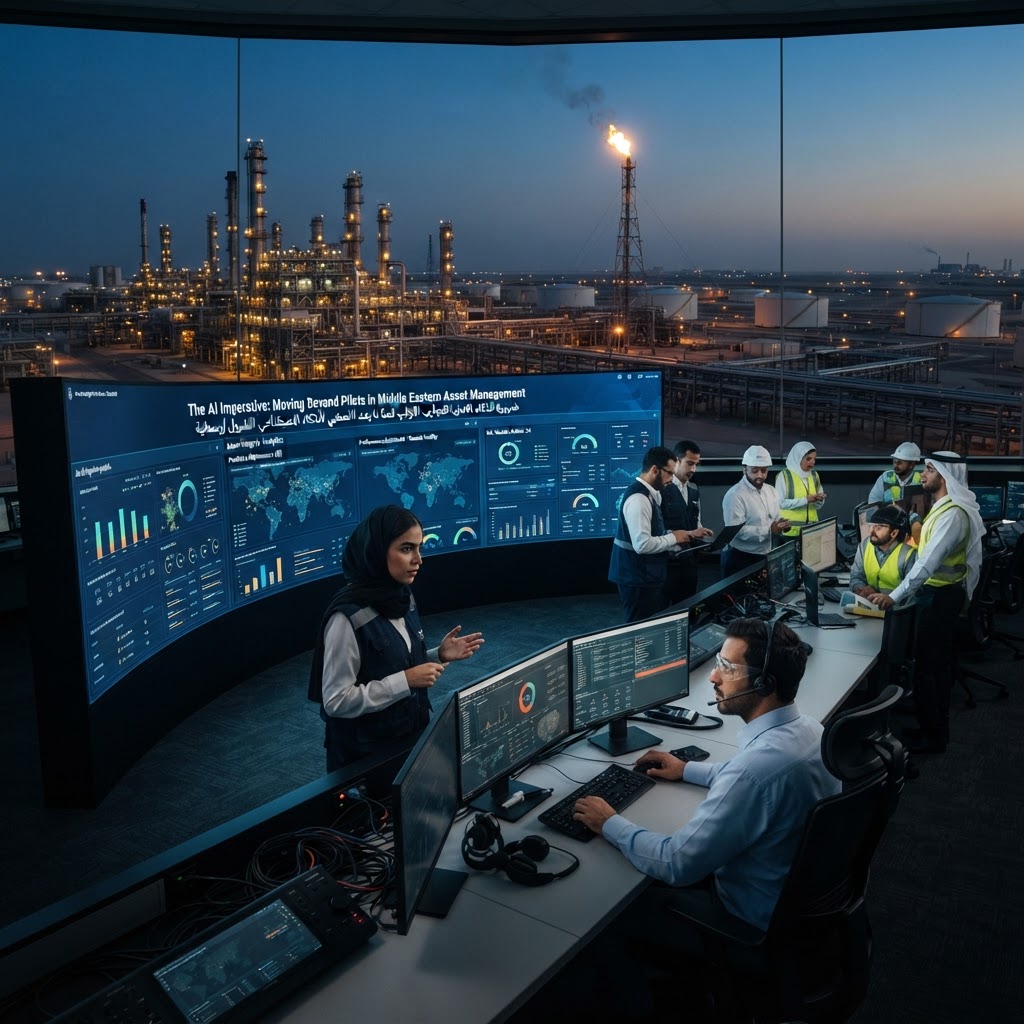
As Wood partners with Databricks to scale AI across the asset lifecycle, we examine why the Middle East is the perfect testing ground for industrial-scale digital transformation.
The recent announcement of a strategic partnership between Wood and Databricks to scale artificial intelligence across the energy asset lifecycle marks a pivotal shift in our industry. For years, the energy sector has been trapped in a cycle of 'pilot purgatory,' where innovative digital solutions remain confined to controlled environments, failing to deliver the promised bottom-line impact. The success of their joint project—which slashed engineering document review time by 75%—is not just a technical win; it is a blueprint for operational efficiency.
From Efficiency to Strategic Advantage
In the Middle East, where capital projects are characterized by immense scale and complexity, the ability to automate routine engineering tasks is no longer a luxury—it is a competitive necessity. As consultants, we often see project delivery hampered by the sheer volume of documentation and the latency in data-driven decision-making. By integrating AI into the core of asset management, operators can move from reactive maintenance to predictive optimization, significantly reducing downtime and capital expenditure.
The Path to Full-Scale Deployment
The challenge for regional operators now lies in integration. Scaling AI requires more than just software; it demands a robust data architecture and a cultural shift within engineering teams. As we advise our clients, the focus must remain on 'energy realism.' AI should be deployed to solve specific, high-impact bottlenecks—such as supply chain logistics or reservoir management—rather than being treated as a panacea. By leveraging cloud-native platforms, Middle Eastern energy firms can finally bridge the gap between legacy infrastructure and the digital future, ensuring that their assets remain resilient in an increasingly volatile global market.