Complexity, AI, and the New Era of GCC Gas: Lessons from ADNOC’s Ghasha Megaproject
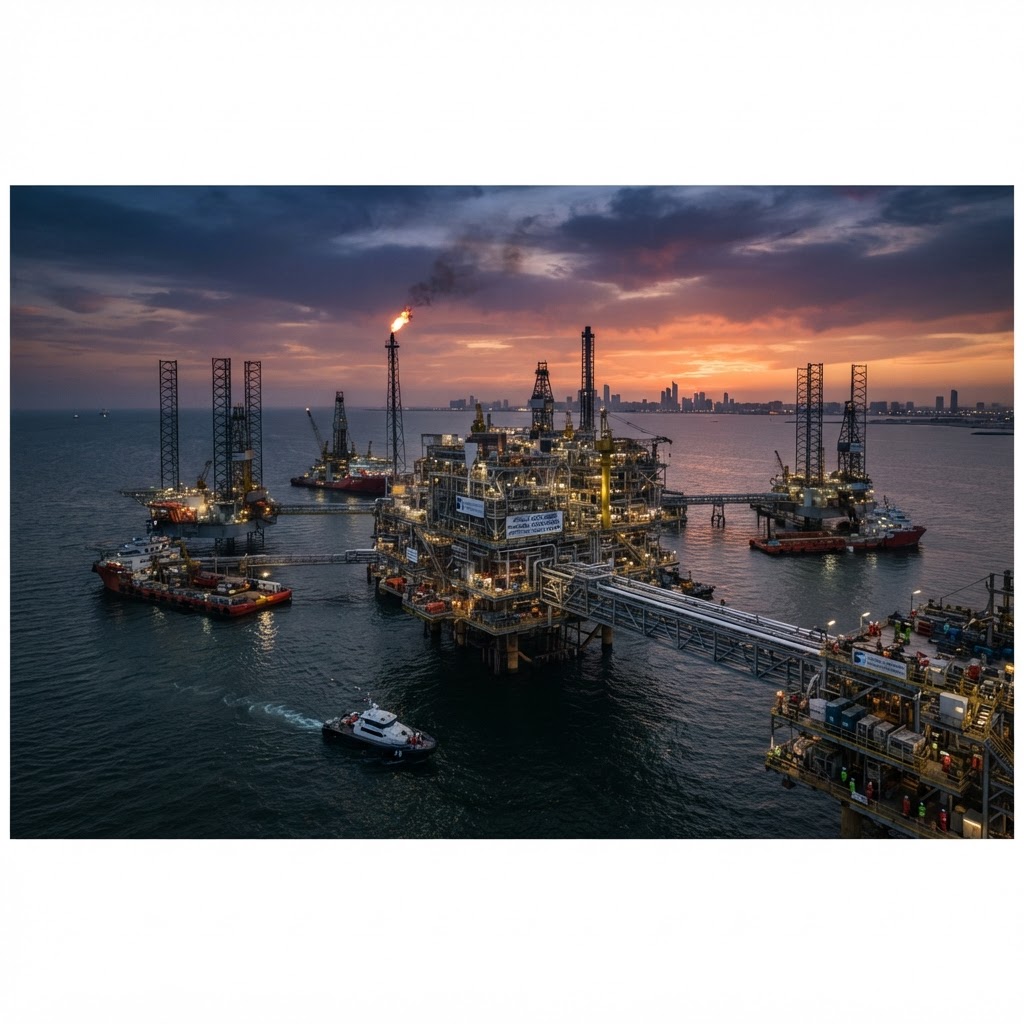
With the SARB Deep Gas project reaching FID and the Ghasha concession accelerating, the UAE is setting a global benchmark for lean engineering in ultra-sour offshore environments.
The recent acceleration of the Ghasha mega-project, punctuated by the Final Investment Decision (FID) for the SARB Deep Gas development, marks a watershed moment for the Middle East’s energy landscape. For those of us navigating the complexities of offshore delivery, the scale of ADNOC’s $150 billion 2026-2030 capex plan is not just a figure; it is a mandate for a fundamental shift in how we engineer and execute capital projects in high-risk environments.
Lean Engineering in Ultra-Sour Environments
The Ghasha concession, encompassing the Hail, SARB, and Nasr fields, represents some of the most technically demanding offshore reservoirs globally. Dealing with ultra-sour gas is no longer a matter of simply upgrading metallurgy. It requires a lean engineering mindset that prioritizes modularity and technological integration from the earliest design phases. At Atticus Energy, we have long advocated for 'engineering for the end-state.' In the case of Ghasha, that end-state is a fully integrated, AI-driven ecosystem that minimizes human footprint in hazardous environments.
The decision to operate the SARB Deep Gas wells remotely from Arzanah Island is a primary case study. By decoupling the control center from the production facility, ADNOC is not only enhancing safety but also driving down long-term OPEX. This remote-first philosophy is a cornerstone of lean engineering. It forces a reduction in heavy offshore infrastructure—helidecks, living quarters, and life-support systems—which in turn reduces the primary capital requirement and the overall environmental footprint of the project.
The Role of AI and Digital Twins
Furthermore, the deployment of AI-enabled solutions, such as those developed by AIQ, at the Ghasha site demonstrates that 'digitalization' has moved from a boardroom buzzword to a critical project component. By 2026, the use of predictive AI for maintenance and real-time data interpretation is no longer optional for projects of this magnitude. For strategic advisors, the challenge is ensuring these digital tools are not 'bolted on' but are central to the EPC strategy. A digital twin must be born at the FEED stage to truly deliver value during the 2030 production ramp-up.
As the UAE moves toward gas self-sufficiency, the lessons from Ghasha are clear: technical complexity must be met with strategic simplicity. By leveraging existing infrastructure, such as tying the SARB wells back to Das Island, ADNOC is showcasing how to maximize existing asset value while expanding into new frontiers. For our clients in the GCC, this balance of aggressive growth and lean delivery remains the gold standard for the coming decade.