The Compression Imperative: Why Ultra-Mega EPC Contracts are Defining 2026
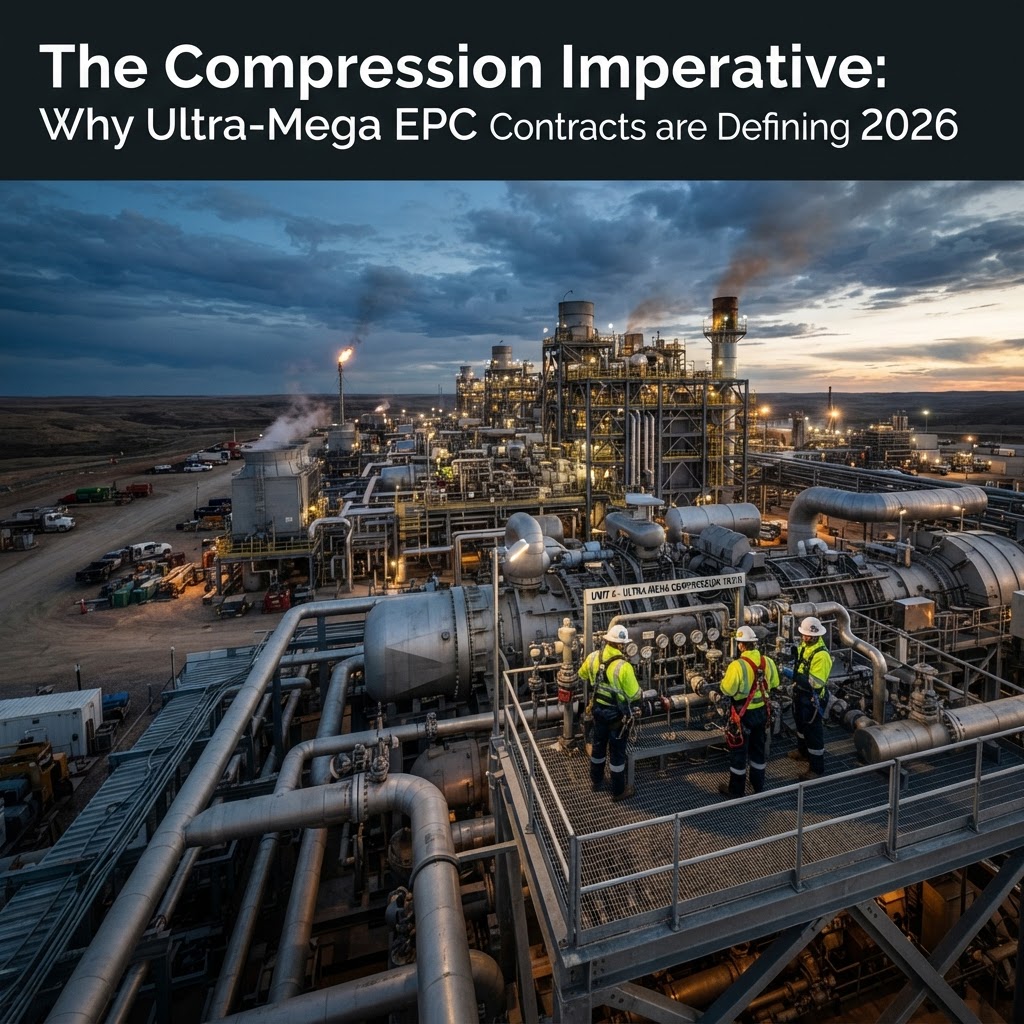
The recent $1.57 billion gas compression contract in the Middle East highlights a broader industry trend: the massive scale-up of midstream infrastructure to meet rising global demand.
The recent award of an ultra-mega gas compression EPC contract, valued at over $1.57 billion, is a bellwether for the current state of the Middle East energy sector. As global demand for natural gas continues to climb, the engineering challenge is no longer just about extraction; it is about the massive, complex infrastructure required to move and process that gas efficiently.
Scaling Up for Efficiency
Gas compression is the heartbeat of modern midstream operations. As fields mature and pressure declines, the need for high-capacity, reliable compression facilities becomes paramount. This recent project underscores a shift toward 'ultra-mega' scale, where economies of scale are leveraged to drive down unit costs while maximizing throughput. For engineering firms, this represents a significant shift in project delivery requirements, demanding higher levels of technical precision and project management maturity.
The Engineering Challenge
Executing a project of this magnitude requires more than just raw construction capacity. It demands sophisticated digital integration, advanced materials science to handle high-pressure environments, and a rigorous approach to safety and environmental compliance. At Atticus Energy, we observe that the most successful projects are those that integrate these elements from the FEED (Front-End Engineering Design) stage. The complexity of these facilities means that any oversight in the early design phase is magnified exponentially during construction.
Investment and the Energy Transition
It is worth noting that these investments are occurring in parallel with the global energy transition. Natural gas remains a critical bridge fuel, and the efficiency gains achieved through these new compression facilities directly contribute to lowering the carbon intensity of the entire value chain. By reducing flaring and optimizing energy usage within the compression process, operators are not only improving their bottom line but also aligning with broader sustainability mandates. As we look toward the remainder of 2026, we expect to see more of these large-scale infrastructure projects, as the region continues to solidify its role as the primary guarantor of global energy security.