Decarbonizing Upstream: The Strategic Imperative Behind Industrial CCUS Expansion in the GCC
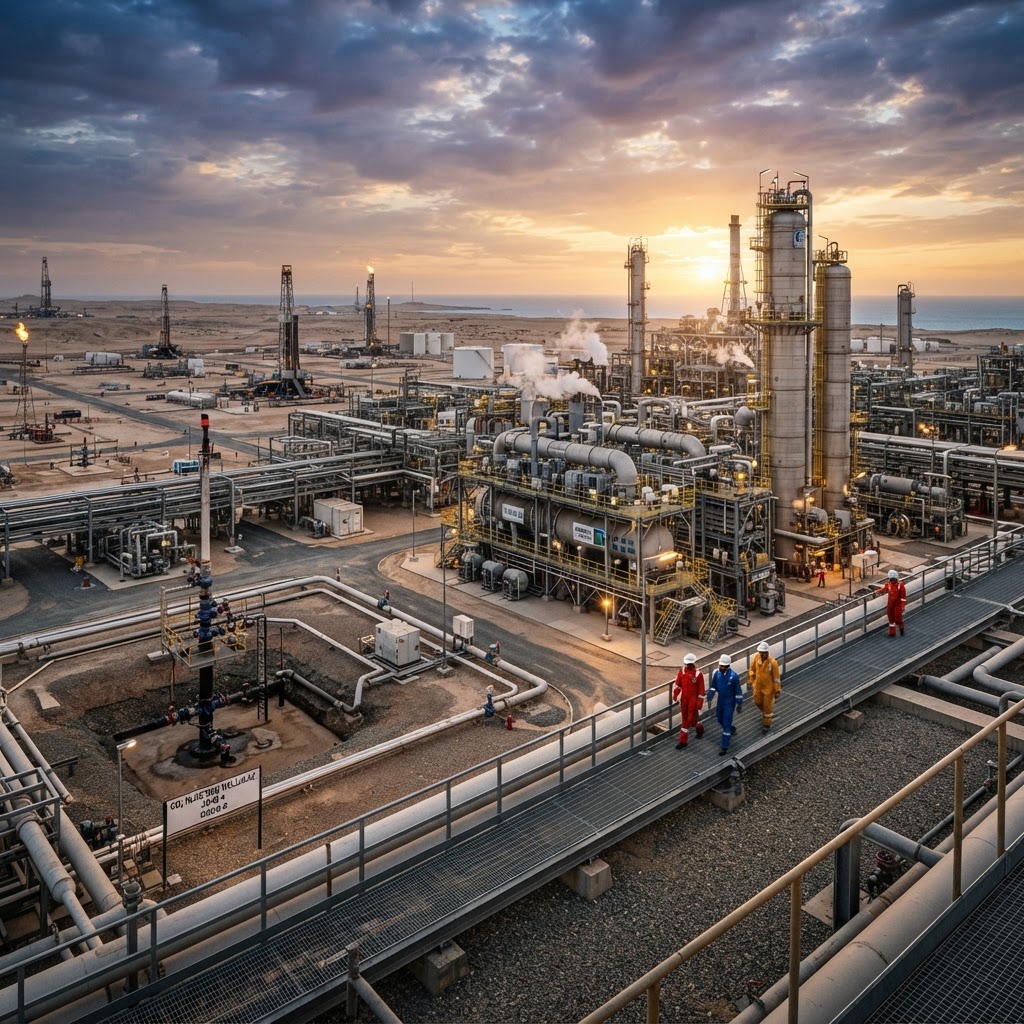
With Gulf Cryo nearly doubling regional carbon capture capacity, the GCC energy sector is rapidly scaling industrial CCUS from isolated pilots into core midstream infrastructure.
Moving Beyond Pilot Projects to Commercial Scale
Industrial decarbonization across the GCC energy corridor has reached an inflection point. The recent announcement by Gulf Cryo regarding the expansion of its merchant CO₂ and industrial capture capacity illustrates a pivotal industry trend: carbon capture, utilization, and storage (CCUS) is transitioning from bespoke corporate social responsibility initiatives into commercial, scalable infrastructure. For upstream and downstream operators across the Middle East, high-volume carbon management is rapidly developing into an essential condition for long-term project bankability and European export compliance.
The Engineering Complexities of Regional CO₂ Value Chains
While the economic justification for CCUS is bolstered by tightening Scope 1 and Scope 2 targets and international carbon border adjustment mechanisms, the engineering hurdles remain complex. CO₂ capture from natural gas sweetening units, steam methane reformers (SMRs), and refinery flue gas streams requires precise thermodynamic modeling and chemical solvent selection. Gulf operators operate under severe climatic conditions—ambient desert temperatures exceeding 45°C impose severe operational stress on cooling water loops and amine regeneration towers.
Moreover, midstream CO₂ logistics present unique flow assurance challenges. Transporting supercritical or liquid CO₂ through regional pipeline networks requires rigorous metallurgy selection to withstand carbonic acid corrosion in the presence of trace moisture, alongside advanced compression train architectures. As Atticus Energy advises on brownfield integration projects, operators are re-evaluating whether decentralized capture with modular liquid CO₂ trucking or centralized high-pressure pipeline networks offer superior risk-adjusted lifecycle returns.
Strategic Advisory: Monetization via EOR and Long-Term Sequestration
The monetization strategy for captured industrial carbon in the Middle East is bifurcated. On one hand, operators are utilizing high-pressure CO₂ for enhanced oil recovery (EOR) across mature carbonate reservoirs, balancing upstream production recovery with net carbon displacement. On the other hand, dedicated deep saline aquifer sequestration is becoming the preferred pathway for producers seeking zero-carbon certification on exported crude and blue hydrogen derivatives.
To capture meaningful value, regional operators must coordinate engineering FEED studies with evolving regulatory frameworks. Moving capital into CCUS today is fundamentally an insurance policy against future carbon taxation, market access restrictions, and portfolio obsolescence in European and Asian markets.
Source: https://ognnews.com/