Beyond Subsidies: Strengthening the Business Case for Europe’s Energy Transition
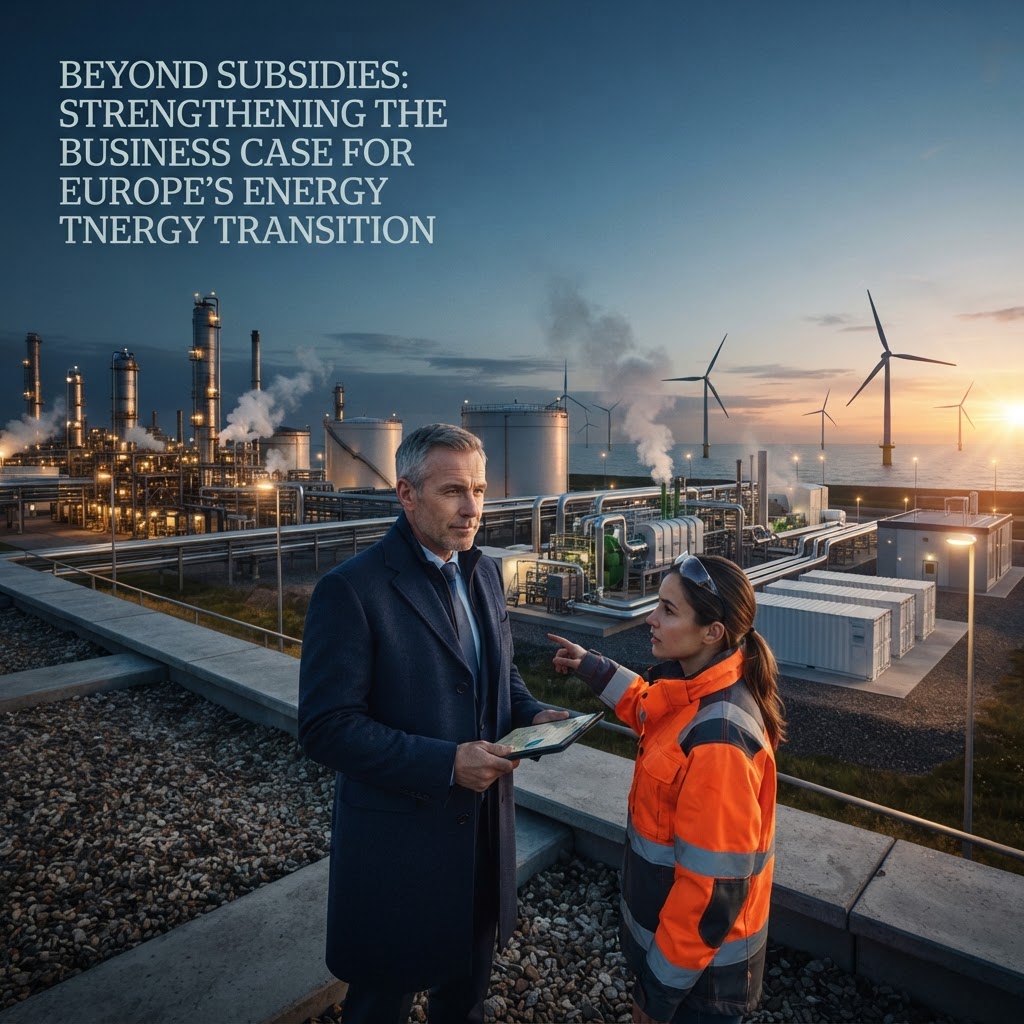
As European energy markets face increasing pressure, the transition to net-zero must move beyond policy mandates to become a self-sustaining economic reality.
The discourse surrounding Europe’s energy transition is undergoing a necessary and pragmatic shift. While the early years were defined by ambitious policy targets and heavy subsidies, the current economic climate demands a more robust, market-driven approach. As highlighted in recent industry analysis, the transition will ultimately be won or lost on the strength of the business case. For strategic advisors and engineers, this means moving away from 'green-at-any-cost' projects toward lean, optimized solutions that deliver genuine ROI.
The Lean Engineering Mandate
In the European context, the high cost of energy and labor makes project efficiency paramount. We are seeing a growing demand for lean engineering principles applied to new energy technologies such as green hydrogen and Carbon Capture, Utilization, and Storage (CCUS). The goal is to reduce the Levelized Cost of Energy (LCOE) to a point where these technologies can compete with traditional hydrocarbons without permanent government lifelines. This requires a granular focus on process optimization, modular construction, and the reduction of non-productive time during project delivery.
At Atticus Energy, we advocate for a 'brownfield-first' strategy where possible. By repurposing existing oil and gas infrastructure—such as depleted reservoirs for carbon storage or existing pipelines for hydrogen transport—operators can significantly lower their initial CAPEX. This not only improves the business case but also accelerates the timeline to commissioning, a critical factor in meeting Europe's 2030 and 2050 targets.
Strategic Realignment for Energy Majors
For the traditional oil and gas majors operating in the North Sea and across the continent, the strategic challenge is one of portfolio balance. The transition is not a binary switch but a multi-decadal evolution. The most successful firms are those treating their transition assets with the same operational rigor as their upstream portfolios. This involves rigorous capital discipline and a focus on projects that offer clear synergies with their existing technical competencies.
The business case for the transition is also being bolstered by the rising cost of carbon and the increasing availability of green financing. However, these external factors should be viewed as tailwinds rather than the primary engine of growth. The real value lies in engineering excellence and strategic foresight. As we advise our clients in the European sector, the winners will be those who can bridge the gap between ESG aspirations and the hard realities of the balance sheet. The transition is no longer just a moral imperative; it is a competitive race for efficiency.