The Hydrogen-Hydrocarbon Hybrid: Redefining Capital Efficiency in the Middle East
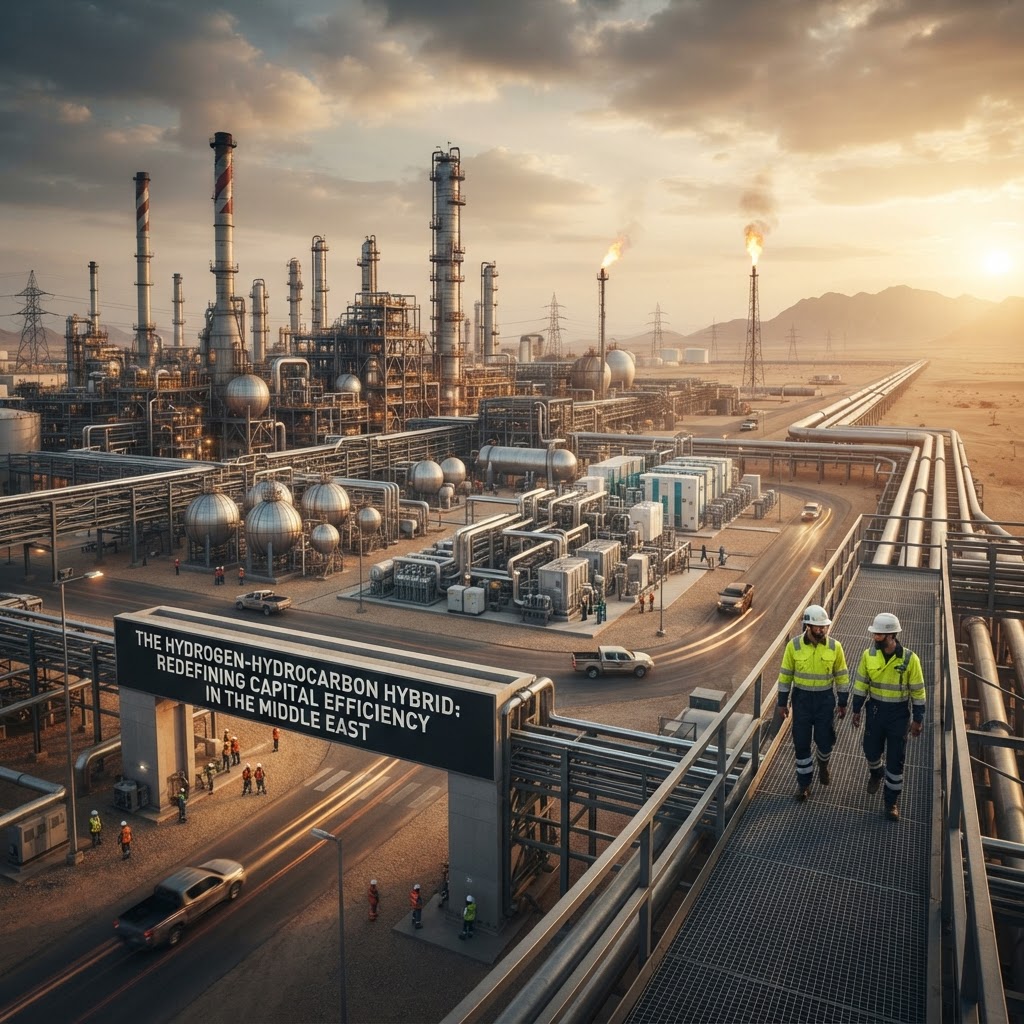
As the GCC pivots toward a dual-energy model, the focus shifts from massive greenfield projects to the surgical integration of blue hydrogen into existing upstream infrastructure.
The Middle East energy landscape is currently undergoing a transformation that is as much about sophisticated engineering as it is about global economics. The recent unveiling of the 2026 Hydrogen Integration Roadmap by major regional players underscores a critical trend: the definitive move toward a hybrid energy model. For Atticus Energy, this represents a unique intersection of our core competencies in lean engineering and strategic advisory. Historically, oil and gas projects in the Gulf Cooperation Council (GCC) were defined by their sheer scale and monolithic investment profiles. However, the current market cycle demands a shift toward surgical precision in asset deployment and capital allocation.
The Lean Engineering Imperative
Integrating blue hydrogen production facilities with existing gas processing plants requires more than just significant capital; it requires a sophisticated, nuanced understanding of brownfield complexities. We are increasingly seeing a departure from traditional, bloated Engineering, Procurement, and Construction (EPC) contracts toward more agile, specialized engineering frameworks. These frameworks are designed to bridge the gap between traditional hydrocarbon extraction and the burgeoning low-carbon economy. This transition, while necessary, is fraught with technical risks that demand a consultant's eye for detail. Technical challenges, such as hydrogen embrittlement in repurposed legacy pipelines and the requirement for high-fidelity, real-time carbon capture monitoring systems, are now at the very forefront of the engineering discourse.
Strategic De-risking
To navigate this landscape, operators must adopt what we call a 'Lean Engineering' mindset. This involves prioritizing de-bottlenecking and modularity over massive, unyielding builds that lack the flexibility to adapt to future technological shifts. Strategic advisory plays a pivotal role here, ensuring that capital is not just spent, but allocated to projects that offer the highest 'decarbonization return on investment.' As we look toward the 2030 targets, the ability to seamlessly blend new-age energy vectors with legacy infrastructure will be the primary differentiator for successful energy firms in the region. At Atticus, we believe that the firms that embrace this integrated, lean approach today will be the ones setting the global standard for energy production tomorrow.
Source: https://www.mees.com/2026/07/19/gcc-hydrogen-integration