Mega-EPC Pipeline Delivery: Capital Discipline and Supply Chain Pressures in Middle East Offshore Gas
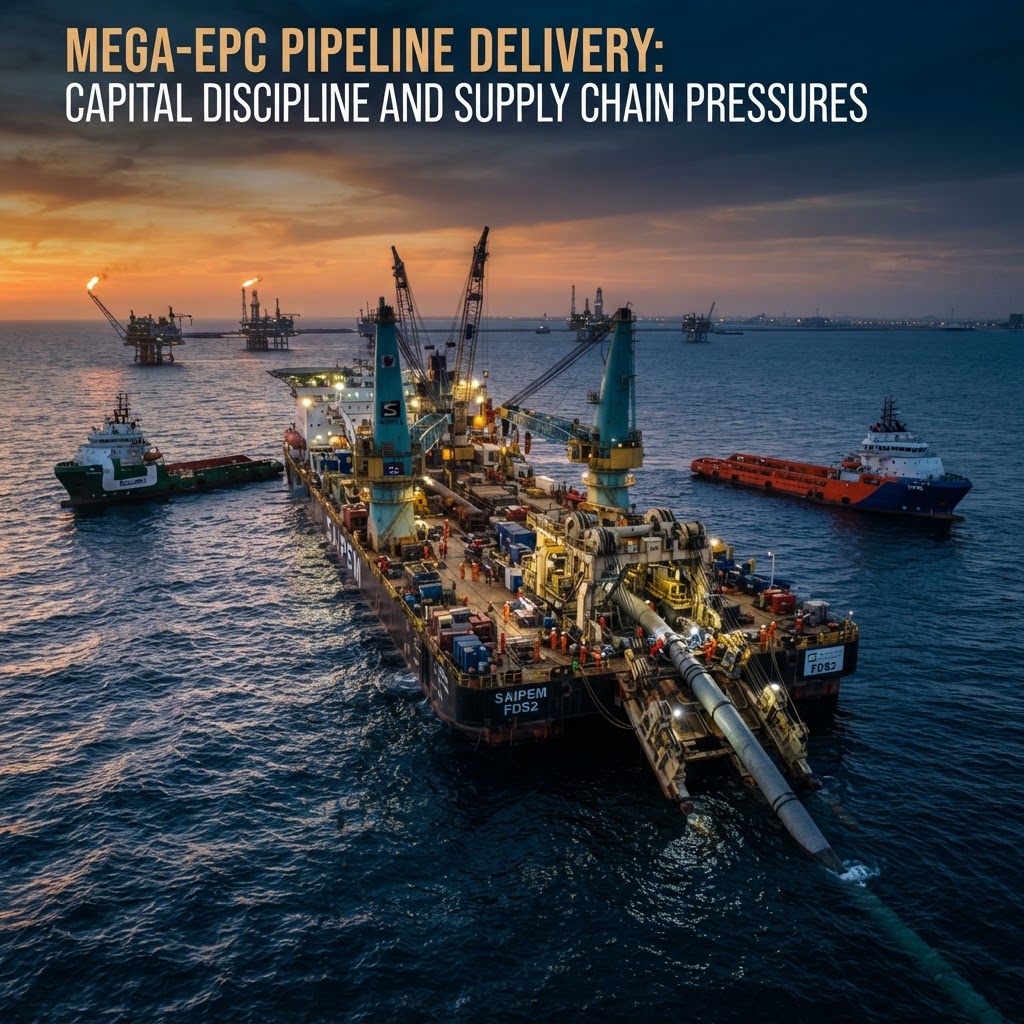
Multi-billion-dollar EPC awards across the GCC highlight booming upstream and offshore gas expansion. Overcoming supply chain bottlenecks requires lean execution and integrated contractor governance.
The upstream oil and gas sector across the Gulf Cooperation Council continues to experience unprecedented momentum, evidenced by a wave of multi-billion-dollar engineering, procurement, construction, and installation (EPCI) package awards across offshore pressure-boosting facilities and gas field developments. As national producers accelerate natural gas exploitation to serve domestic power grids and secure blue-fuel export capabilities, regional capital expenditure is operating at multi-year highs. Yet, for project developers and engineering consultancies, this surge in contract awards brings familiar execution hazards that demand disciplined stewardship.
Contractor Bandwidth and Global Supply Chain Squeezes
With major Tier-1 and Tier-2 EPC contractors simultaneously securing mega-scale offshore packages across the UAE, Saudi Arabia, and Qatar, contractor fabrication bandwidth and engineering human capital are becoming severely strained. Heavy fabrication yards, specialized installation vessels, and lead times for high-pressure subsea compressors and exotic alloy metallurgy are experiencing substantial backlogs. In this environment, conventional fixed-price lump-sum contracts face schedule slippage and margin erosion if project owners fail to implement proactive owner's engineering and supply chain surveillance early in the Front-End Engineering Design (FEED) cycle.
Implementing Lean Engineering and Modular Topsides Delivery
To insulate capital investments against cost escalations and delayed first gas, project delivery models must move toward modularization and standardisation. Modular topsides and standardized compression skids allow operators to decouple site-preparation and offshore jacket installation from complex topsides integration. Integrating modular engineering early enables EPC contractors to execute fabrication in parallel across secondary international yards, bypassing regional drydock congestions. At Atticus Energy, we emphasize that lean engineering is not about cutting design corners; it is about designing out unnecessary customized complexity that threatens project delivery schedules.
Strategic Advisory: The Pathway to Sustained Upstream Returns
As the Middle East positions itself as the world’s most cost-effective and carbon-advantaged gas provider, successful project execution hinges on transparent contractor governance and progressive milestone de-risking. Operators that couple decisive capital commitment with robust brownfield interface management, integrated procurement monitoring, and lifecycle digital twin readiness will ensure these offshore mega-investments deliver long-term return on capital employed throughout fluctuating commodity cycles.