The Mid-2026 Pivot: Strategic Realities of the European Hydrogen Backbone
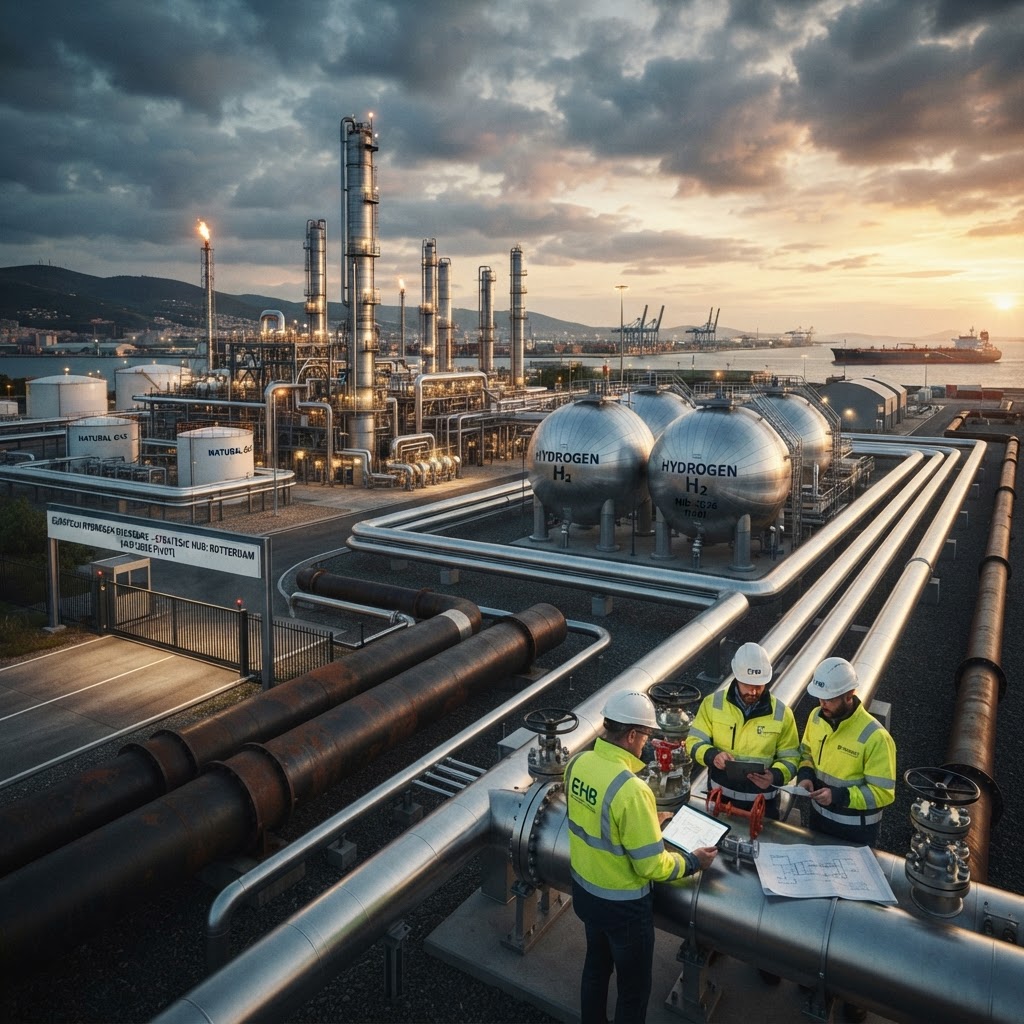
As the EU’s decarbonized gas deadline arrives in mid-2026, the industry must balance technical integrity with strategic asset repurposing for the emerging Hydrogen Backbone.
July 2026 marks a regulatory milestone for the European energy industry. With the transposition deadline for the EU’s Hydrogen and Decarbonised Gas Market Package now in effect, transmission system operators (TSOs) across the continent are no longer merely discussing the transition—they are living it. The focus has moved decisively toward the implementation of the European Hydrogen Backbone (EHB), a massive logistical undertaking aimed at connecting green hydrogen supply hubs with the industrial heartlands of Germany, France, and the Benelux region. For strategic advisors at Atticus Energy, the challenge is now one of balancing engineering risk with rapid capital deployment.
Engineering Asset Life Extensions and Hydrogen Integrity
The primary engineering hurdle is not just building new pipelines, but the technical audit and repurposing of existing carbon-steel gas infrastructure. Transporting hydrogen through legacy natural gas networks presents the very real risk of hydrogen embrittlement—a metallurgical phenomenon that can lead to catastrophic failure if not properly managed. From an engineering advisory standpoint, this requires a shift from traditional maintenance to advanced predictive analytics and non-destructive testing (NDT). We are currently seeing a surge in demand for integrity assessments that evaluate the compatibility of elastomers and valves with high-pressure hydrogen. Applying lean principles here involves prioritizing high-connectivity corridors that offer the fastest route to market, rather than attempting a wholesale network conversion that would strain balance sheets and technical resources.
Navigating the Stranded Asset Dilemma
Strategically, the 2026 landscape is defined by the management of 'stranded asset' risks. As gas demand for power generation shifts toward Renewables and Hydrogen, legacy midstream players must justify their valuation through repurposing. The EU’s recent PCI (Projects of Common Interest) designations have unlocked significant funding, but technical feasibility remains the cornerstone of bankability. At Atticus Energy, we believe the key to long-term resilience is a hybrid strategy: maintaining gas security through LNG import capacity—which proved vital during the recent geopolitical supply squeezes—while simultaneously de-risking the hydrogen transition. The operators who succeed will be those who integrate technical asset audits with a clear-eyed strategic roadmap that aligns with the EU's 2030 targets. The Hydrogen Backbone is no longer a distant vision; it is a critical infrastructure project requiring the highest level of engineering precision and strategic foresight.