Modularization and the New Capital Efficiency Era in the GCC
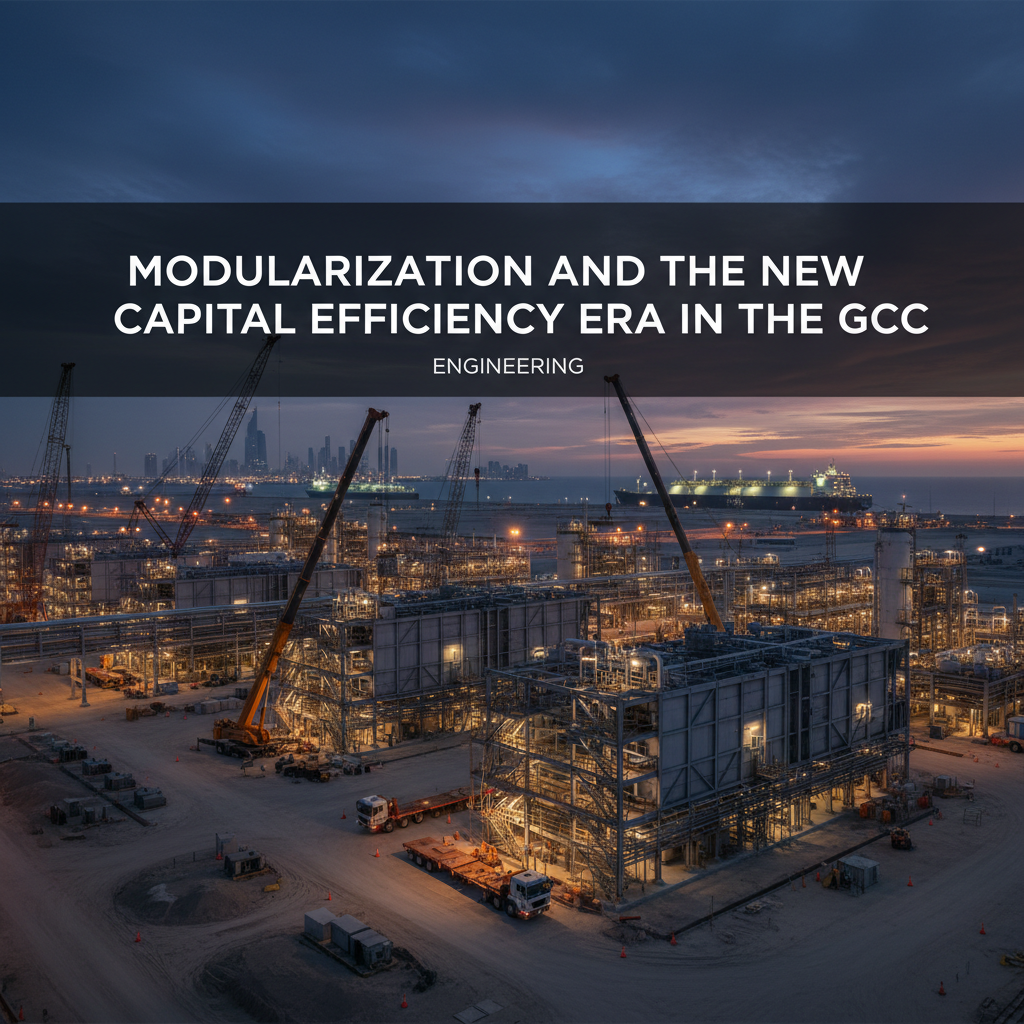
As GCC National Oil Companies push for aggressive 2030 targets, the shift from traditional construction to modular engineering is redefining project delivery and capital efficiency.
As we navigate the middle of 2026, the energy landscape in the Gulf Cooperation Council (GCC) is undergoing a fundamental transformation in project execution. Recent announcements from major National Oil Companies (NOCs) regarding the acceleration of their 'Project Velocity' initiatives mark a definitive break from the traditional, labor-intensive stick-built construction models of the past decade. For a consultancy like Atticus Energy, which champions lean engineering, this shift is not just welcome—it is essential.
The Lean Engineering Imperative
The primary driver behind this transition is a tightening global labor market and the increasing complexity of integrated gas and petrochemical facilities. By shifting a significant portion of fabrication to controlled modular environments, operators are seeing a 20-30% reduction in on-site man-hours. This isn't merely about cost-cutting; it is about risk mitigation. In the harsh environments of the Middle East, reducing the footprint of site-based personnel significantly lowers the HSE exposure and streamlines logistics. From our perspective as strategic advisors, the successful deployment of modularization requires a 'front-end loaded' approach. Engineering must be 80-90% complete before a single piece of steel is cut, a standard that many traditional firms struggle to meet. This is where lean engineering differentiates itself by focusing on the 'design for manufacture' (DfM) philosophy.
De-risking the Schedule
Capital investment in the GCC remains robust, but the scrutiny on ROI has intensified. Investors are no longer content with the 'mega-project' delays that characterized the early 2020s. The move toward standardized, repeatable module designs allows for a more predictable capital expenditure profile. We are advising our clients to look beyond the initial procurement costs and consider the total lifecycle value. A modular unit might carry a higher transport cost, but the savings realized through shortened commissioning periods often outweigh these expenses by a factor of three. As we look toward the 2030 targets, the ability to deliver assets that are both 'built to purpose' and 'built for speed' will define the leaders in the regional energy market.
Source: https://www.atticusenergy.com/insights/modularization-gcc-2026