Navigating Crude Supply Disruptions: Engineering Resilient Midstream and Storage Infrastructure in the Gulf
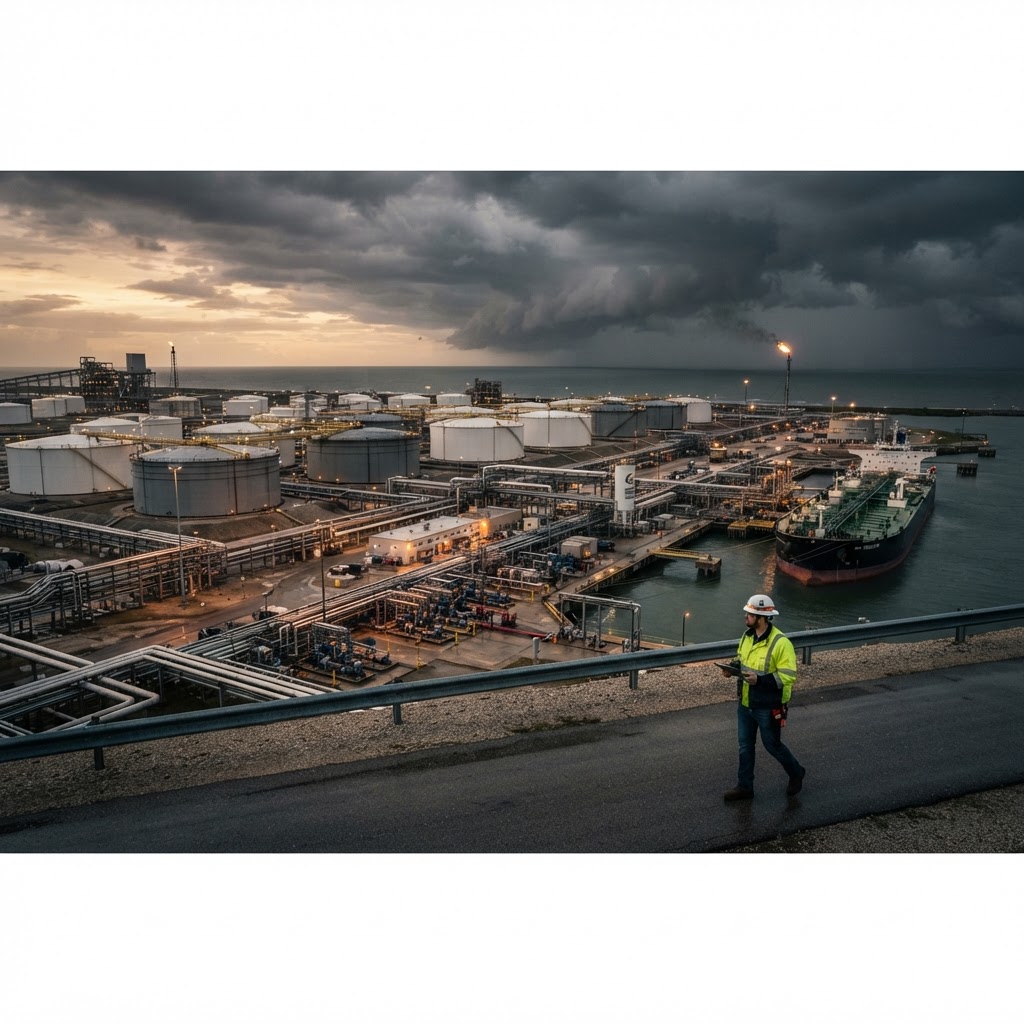
With regional tensions and geopolitical strikes pushing Brent crude back above $101 per barrel, Middle East operators must rethink brownfield asset hardening, redundant export routes, and operational risk engineering.
Geopolitical turbulence has once again introduced acute volatility to global energy corridors. With crude prices breaching the triple-digit threshold following escalated maritime strikes and disruptions across the southern Gulf, upstream and midstream operators across the Middle East face a critical inflection point. For decades, asset owners have prioritised throughput optimisation and single-point delivery efficiency. However, in an operational landscape characterised by unpredictable drone strikes, maritime corridor vulnerabilities, and rapid feedstock reallocation, the engineering paradigm must shift fundamentally toward structural resilience.
The Dual Imperative: Hardening Assets and Mitigating Single-Point Failure
Recent operational suspensions across processing facilities underscore the structural exposure of regional energy infrastructure. When a central gas-oil separation plant (GOSP) or coastal terminal faces sudden curtailment, the cascading downstream effects on refining, liquefaction, and export pipelines can be catastrophic. Strategic engineering advisory now demands a comprehensive audit of single-point vulnerabilities across topsides, tank farms, and subsea tie-ins. Lean engineering frameworks must prioritize modular redundancy, automated bypass manifolds, and enhanced isolation valving systems that allow facilities to isolate compromised subsystems within minutes without forcing an entire field shutdown.
Optimising Brownfield Logistics and Emergency Export Flexibility
Beyond passive facility protection, operators require agile capital allocation toward pipeline debottlenecking and multimodal takeaway capacity. Traditional logistics models built around high-volume, static offshore tanker loadings are vulnerable when maritime straits encounter transit bottlenecks. Forward-thinking National Oil Companies (NOCs) are actively evaluating bypass pipeline loops, tie-backs to alternative deepwater berths, and strategic storage buffer expansions. At Atticus Energy, we advise project sponsors to treat dynamic contingency engineering not as an auxiliary cost, but as an indispensable risk-mitigation discipline that protects project bankability and secures contracted supply commitments.
Advisory Perspective: Balancing Capital Discipline with Defensive CapEx
High benchmark crude prices generate strong near-term free cash flow, but capital discipline remains essential. Rather than over-allocating capital to speculative Greenfield expansions in high-risk zones, operators should deploy precision CapEx toward brownfield hardening, SCADA cybersecurity, distributed power generation, and rapid-recovery subsea intervention packages. Engineering resilience into Middle East upstream and midstream operations ensures that despite external supply disruptions, asset integrity and long-term delivery capability remain uncompromised.