The North Sea’s 'Decade of Decommissioning': Re-framing Liabilities as Engineering Opportunities
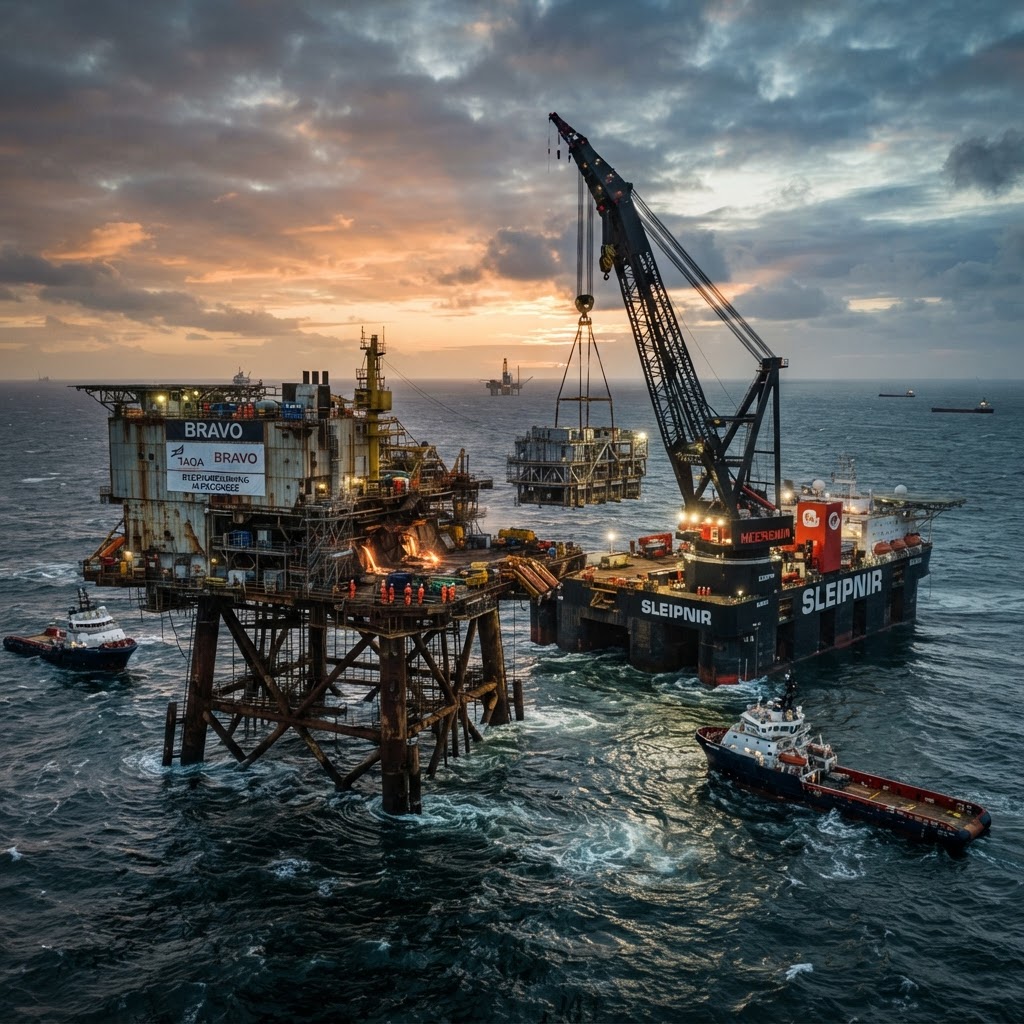
The North Sea Transition Authority reports a record £2.6 billion spend on decommissioning, prompting a strategic shift toward vessel-led solutions and lean engineering in the UKCS.
The North Sea Transition Authority’s (NSTA) report released on August 14, 2026, brings a stark reality into focus for operators in the UK Continental Shelf (UKCS). With a record £2.6 billion spent on decommissioning in the last year alone and a daunting backlog of 500 wells awaiting abandonment, the industry is entering what we at Atticus Energy call the 'Decade of Decommissioning.' However, the real story lies in the newly signed charter between 17 major operators to pivot away from traditional rig-based abandonment in favor of vessel-led solutions.
From Rigs to Vessels: A Lean Engineering Shift
The strategic shift to utilize specialized vessels for wellhead severance and plugging is a classic application of lean engineering. For decades, the industry relied on heavy, expensive drilling rigs for abandonment work—assets that are over-engineered for the task of plugging and abandonment (P&A). By moving toward vessel-led intervention, operators like Shell, Equinor, and Eni are essentially rightsizing their technical requirements. This move could potentially reduce the decommissioning emissions footprint and, more importantly, slash the per-well cost in a way that makes clearing the 1,500-well five-year forecast economically feasible.
The Backlog Challenge: Operational Throughput
As strategic advisors, we view the 500-well backlog not just as a financial liability, but as a bottleneck in operational throughput. The maturity of the North Sea means that decommissioning expenditure is forecast to overtake capital investment by 2029. This is a seismic shift in the business model of an oil major. Companies must now excel at 'reverse engineering'—taking assets apart with the same precision and lean methodology they once used to build them. The new NSTA-led charter is a necessary step in standardizing these processes, but the engineering community must go further in creating repeatable, modular decommissioning workflows to prevent costs from spiraling.
Circular Economy and Strategic Value
We believe the next frontier for the North Sea is not just efficient removal, but strategic repurposing. While the current focus is on clearing the backlog, the engineering talent currently engaged in abandonment projects will be the same workforce required for Carbon Capture and Storage (CCS) and hydrogen storage infrastructure. By mastering lean decommissioning now, the industry is effectively training the specialized workforce needed for the energy transition’s 're-use' phase.
For investors and operators, the message is clear: the North Sea is no longer a pure production play. It is a laboratory for the circular energy economy. Those who embrace vessel-led, lean decommissioning strategies today will be the ones who manage the most resilient and cost-effective portfolios through the 2030s.