The North Sea Reset: Navigating the Intersection of Policy and Production
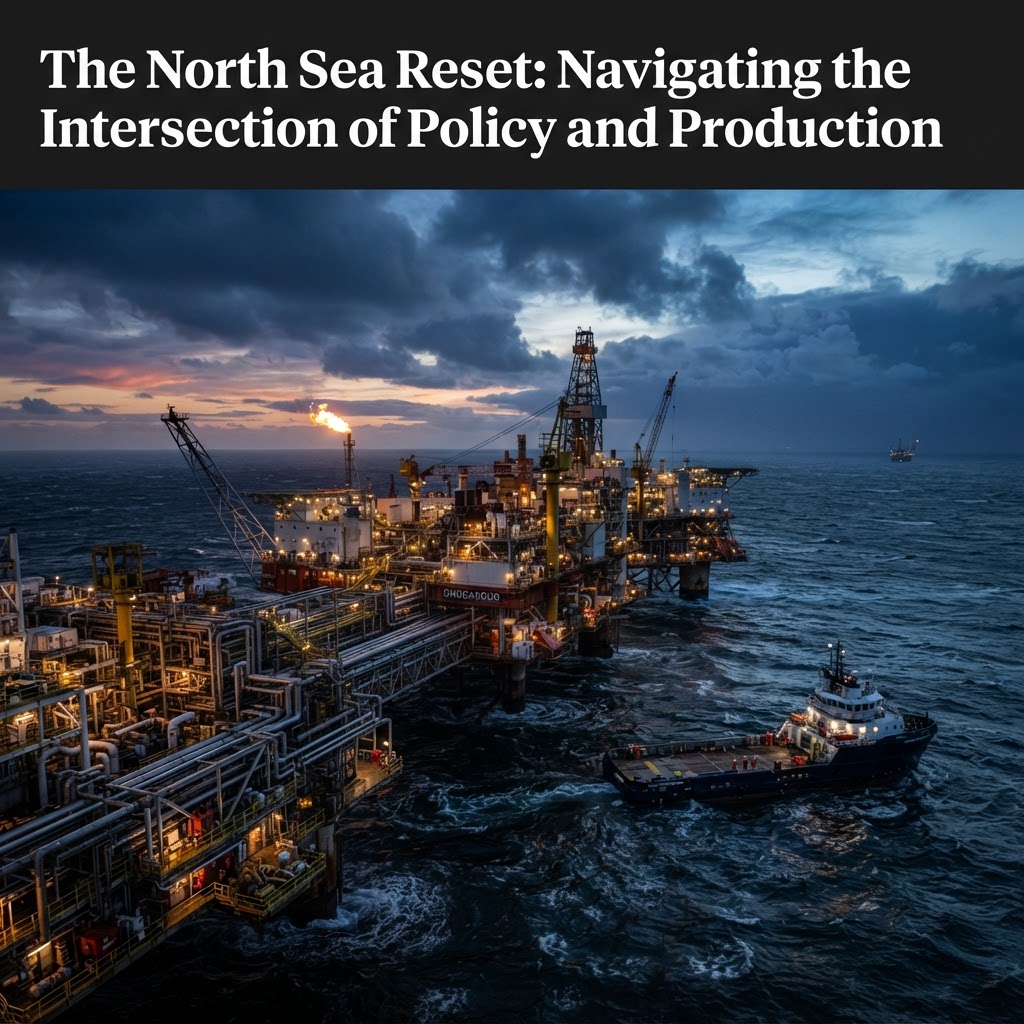
Recent signals from the UK government indicate a significant shift in North Sea energy policy. For strategic investors, this marks a new chapter in the managed transition of one of the world's most mature basins.
The political winds in the United Kingdom are shifting, and with them, the future of the North Sea energy basin. Recent reports suggest the incoming administration is preparing a pragmatic policy reset, signaling a willingness to approve crucial projects like Jackdaw and Rosebank. For Atticus Energy’s strategic advisory team, this transition reflects a broader European realization: energy security cannot be treated as a secondary concern to the energy transition; the two must be inextricably linked.
Pragmatism over Polarization
For several years, the North Sea has been a battleground for conflicting ideologies. However, the reality of global energy supply chains and the economic necessity of domestic production are forcing a return to strategic realism. The current calls from industry bodies like Offshore Energies UK (OEUK) for a fiscal regime reset—specifically regarding the Energy Profits Levy—are not merely pleas for profit; they are calls for the stability required to unlock billions in deferred investment. Without this capital, the UK faces an accelerated decline in production that would lead to increased import dependency and a loss of the very engineering skills needed for the future of Carbon Capture and Storage (CCS).
The Value of the Tie-Back Strategy
From an engineering and project delivery perspective, the focus on 'tie-backs' is the right move for this stage of the North Sea's lifecycle. Tie-backs allow new resources to be funneled through existing infrastructure, drastically reducing both the capital expenditure and the carbon intensity per barrel produced. However, this strategy is not without risk. Managing the flow assurance and integrity of aging pipelines when introducing new, often chemically distinct fluids, requires a high degree of technical sophistication.
As experienced energy consultants, we emphasize that the 'North Sea Transition Deal' must be treated as a live business strategy rather than a static policy document. The ability to pivot between traditional extraction and new energy ventures—such as repurposing gas fields for hydrogen storage—is where the real value lies. The current policy reset offers a window of opportunity for operators to demonstrate that the oil and gas industry is the most capable partner in delivering a secure, managed transition.
Looking Ahead
For our clients in Europe, the lesson is one of resilience. The North Sea remains a world-class basin, not because of its remaining reserves alone, but because of its infrastructure and expertise. As the regulatory environment stabilizes, we expect to see a renewed focus on brownfield efficiency and digital twin technology to manage late-life assets. The 'North Sea Reset' is a reminder that in the energy sector, strategy must always be grounded in both technical reality and geopolitical necessity.