Securing the Perimeter: The Rise of Counter-Drone Systems in GCC Energy Infrastructure
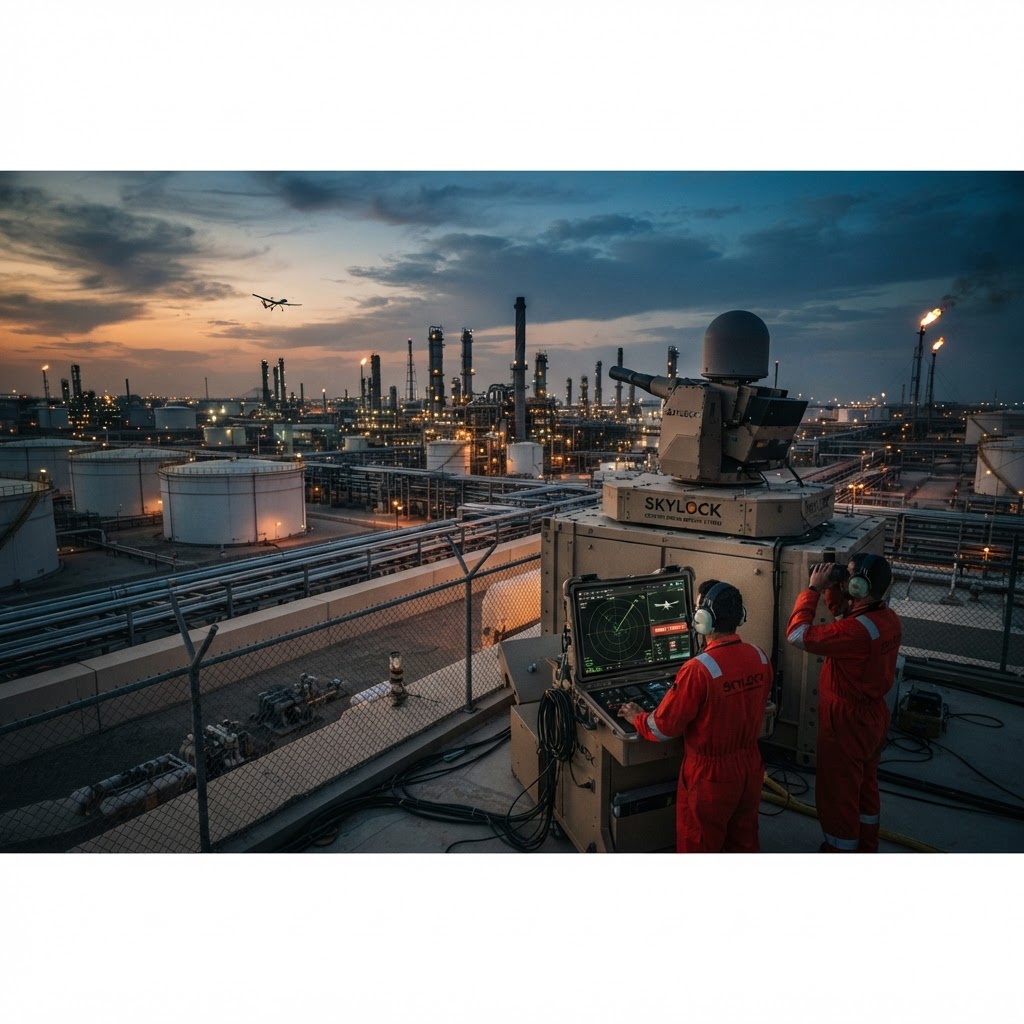
As asymmetric threats to energy assets evolve, a new $22.3 million counter-drone contract highlights the critical shift toward electronic resilience in Middle Eastern oil and gas fields.
The recent announcement of a $22.3 million contract to deploy a counter-drone sensor network across Middle Eastern oil and gas fields marks a significant inflection point in how we approach asset integrity and site security. For years, the industry focused on physical barriers and traditional surveillance. However, the rapid proliferation of low-cost, high-capability unmanned aerial systems (UAS) has rendered conventional perimeters porous. As consultants at Atticus Energy, we view this development not merely as a security upgrade, but as a fundamental shift in the engineering of resilient energy infrastructure.
The Engineering Challenge of Asymmetric Threats
Protecting sprawling upstream assets in the GCC presents unique engineering hurdles. Unlike a compact industrial plant, oil fields often span hundreds of square kilometers of harsh desert terrain. The deployment of a sensor network, as reported this week, requires a sophisticated integration of radar, radio frequency (RF) scanners, and electro-optical/infrared (EO/IR) cameras. From a project delivery perspective, the challenge lies in 'sensor fusion'—the ability to synthesize data from these disparate sources into a single, actionable operating picture without overwhelming the control room with false positives.
For lean engineering firms, the focus must be on interoperability. These new counter-drone layers must interface seamlessly with existing Supervisory Control and Data Acquisition (SCADA) systems and Emergency Response Plans (ERP). We are no longer just building pipelines and processing units; we are building 'intelligent fortresses' that must detect and neutralize threats in the electromagnetic spectrum before they manifest as physical damage.
Strategic Implications for Capital Investment
From a strategic advisory standpoint, the cost of these systems—while significant—is a fraction of the potential losses incurred by a single successful strike on a critical processing node. The industry is moving toward a model where 'Security by Design' is a prerequisite for capital investment. Investors and insurers are increasingly scrutinizing the electronic resilience of projects before committing funds. In the Middle East, where energy infrastructure is the backbone of national economies, the adoption of these advanced sensor networks is a clear signal to global markets that the region is prioritizing the continuity of supply against emerging geopolitical risks.
At Atticus Energy, we believe the next phase of this evolution will involve the integration of AI-driven predictive analytics. By analyzing patterns in drone activity and RF signatures, operators can move from a reactive posture to a proactive one. For engineering teams, this means designing facilities with the necessary power and data backbones to support these high-bandwidth security technologies from day one. The perimeter is no longer a fence; it is a digital shield.
Source: https://interestingengineering.com/energy/us-drone-sensor-to-protect-middle-east-oil