The North Sea Reset: Navigating the UK’s Strategic Energy Pivot
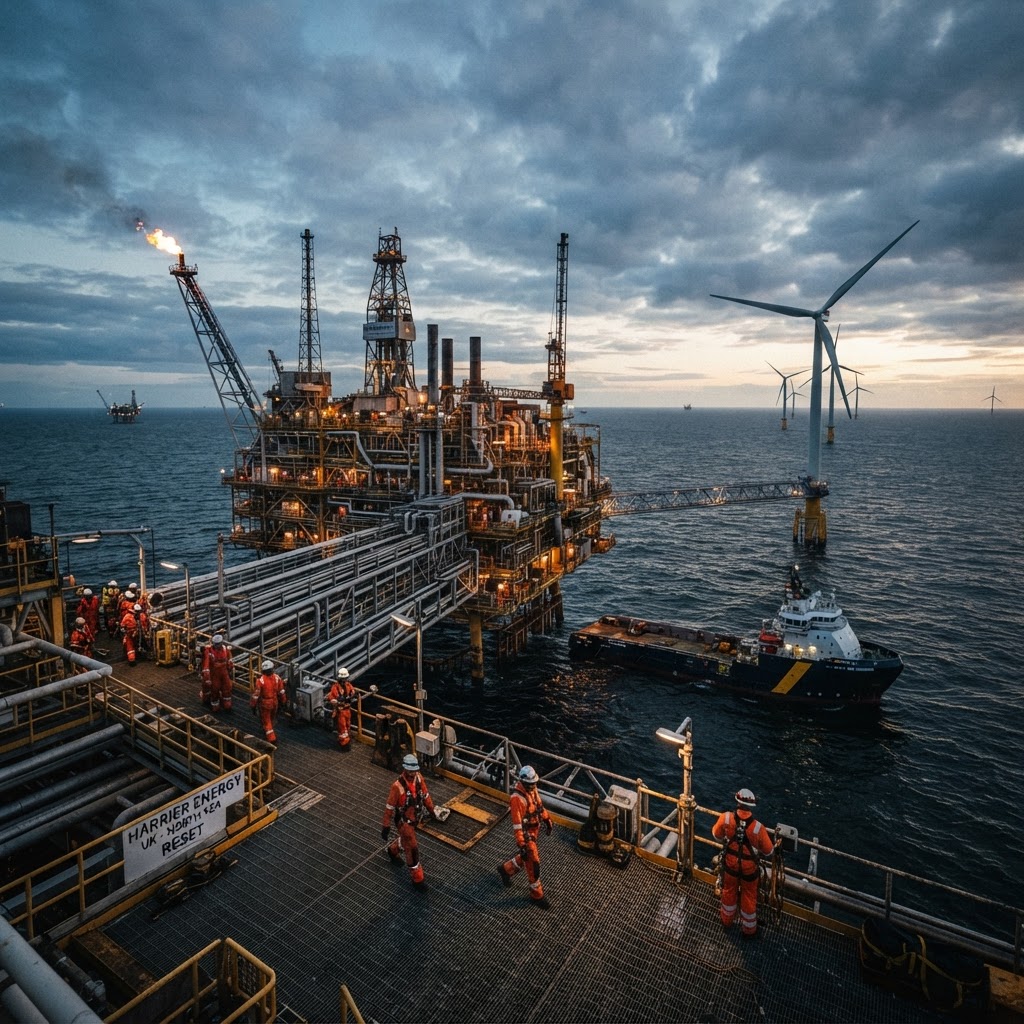
The UK’s shifting energy policy landscape offers a unique moment for the North Sea to redefine itself. A pragmatic 'all-energy' approach is essential to balancing decarbonization with the technical realities of legacy infrastructure.
As we reach the midpoint of 2026, the UK’s North Sea energy sector finds itself at a defining crossroads. The recent policy signals from the new government in Westminster—marked by high-level outreach to offshore operators and unions—suggest a recalibration of the clean energy superpower narrative. For years, the industry has been caught between the hammer of aggressive decarbonization targets and the anvil of energy security. Now, we are seeing the emergence of a more pragmatic all-energy approach. At Atticus Energy, we view this reset as a vital opportunity for strategic advisory and lean engineering to bridge the gap between legacy oil and gas production and a future dominated by renewables.
The Pragmatism of Asset Life Extension
The potential movement on projects like Rosebank and Jackdaw highlights a critical reality: the North Sea’s transition cannot be a light-switch event. It must be a managed evolution. The engineering community is now tasked with a dual mandate. On one hand, we must optimize the tail-end production of mature fields using lean methodologies that reduce OPEX and carbon intensity. On the other, we must design these assets with their second life in mind. Whether it is repurposing pipelines for hydrogen transport or utilizing depleted reservoirs for Carbon Capture and Storage (CCS), the strategic value of existing infrastructure is at an all-time high. The government’s renewed focus on the supply chain—targeting 60,000 clean energy jobs by 2030—is a recognition that the same skills that built the North Sea’s oil legacy are exactly what is needed for its green future.
Navigating the Fiscal and Regulatory Landscape
However, engineering excellence is only half the battle. The fiscal environment remains a significant hurdle. The increase in the Energy Profits Levy to 78% has forced many operators to re-evaluate their capital allocation. From an advisory perspective, this demands a shift toward capital-efficient decarbonization. Companies can no longer afford vanity projects; every investment must be justified by both its carbon reduction and its contribution to asset longevity. The challenge for the new administration will be to provide the long-term regulatory certainty that allows for multi-decade investments in offshore wind integration and CCS clusters. Without this, the North Sea risks an accelerated decline that leaves thousands of skilled workers behind.
A Blueprint for Global Energy Hubs
Ultimately, the North Sea is serving as a global laboratory for the energy transition. The lessons learned in the UK Continental Shelf (UKCS) regarding skills transferability and infrastructure repurposing are directly applicable to our clients in the Middle East and wider Europe. As a consultancy, Atticus Energy is focused on helping operators navigate this complexity. We believe the future belongs to the hybrid operator—those who can leanly manage a diverse portfolio of hydrocarbons and electrons. The current policy reset is a call to action for the industry to prove that it is not a sunset sector, but rather the foundation of a new, resilient energy system.
Source: https://oeuk.org.uk/new-government-can-revitalise-north-sea-energy-industry-with-policy-reset/