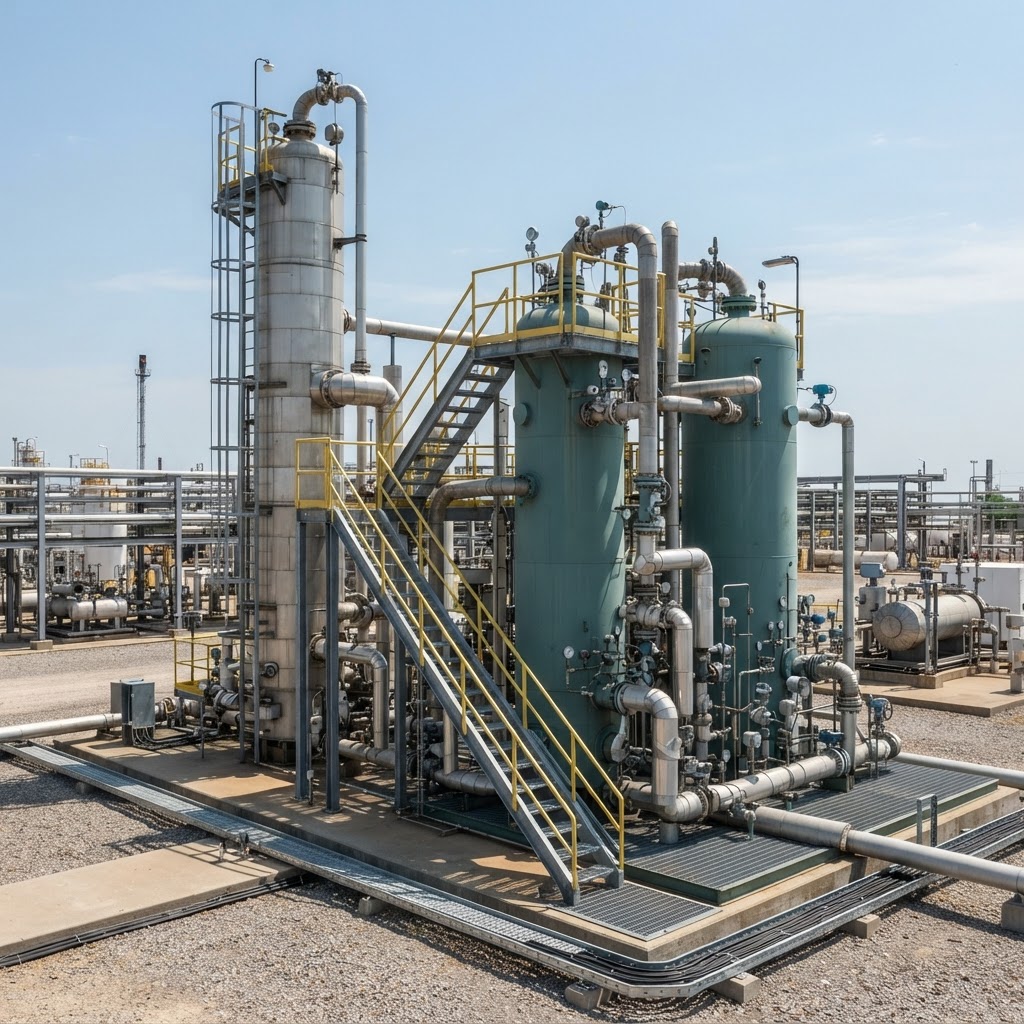
Gas dehydration: glycol or molecular sieve?
Glycol units are cheap and forgiving. Molecular sieves reach the very low water content that cryogenic processes demand. The downstream process decides which you need.
The situation
Water must be removed from gas to prevent hydrates and corrosion and to meet sales specifications. TEG glycol contactors suit pipeline water dew points. Molecular sieves reach very low water content, which cryogenic NGL or LNG units need.
Why remove water
Water in gas causes corrosion, hydrates and ice. In pipelines the target is a water dew point below the lowest expected operating temperature. In cryogenic plants the target is much lower, because any water will freeze in the cold box or expander.

Glycol dehydration
Triethylene glycol (TEG) absorbs water in a contactor column. Rich glycol is heated in a regenerator to drive off water and returned. TEG units are relatively cheap, run continuously and handle swings well. Watch-points are glycol losses, foaming, and emissions of aromatic compounds from the regenerator vent.
Molecular sieve dehydration
Beds of adsorbent remove water to very low levels. One bed adsorbs while another is regenerated with hot gas. Sieves are the standard choice upstream of turboexpanders. Watch-points are bed life, regeneration heater sizing and the effect of liquid carryover on the adsorbent.
Choosing
- Pipeline or export only: glycol is usually sufficient.
- Cryogenic recovery downstream: molecular sieve is needed.
- Large, wet feeds to a cryogenic plant: a glycol unit for bulk removal ahead of a smaller sieve can be cheaper overall.
Operating tips
Good inlet separation protects both technologies. Monitor water content at the outlet continuously, and trend it, because gradual breakthrough is easier to manage than a sudden one.
Key Takeaways
- The downstream process sets the water specification.
- Glycol suits pipeline service; sieves suit cryogenic service.
- Inlet separation protects both technologies.
- Trend outlet water content to catch gradual deterioration.
How Atticus helps
We size and review dehydration systems, troubleshoot glycol losses and sieve bed performance, and support upgrades when downstream processes change.
Real-world examples
glycol where sieves were needed
A plant fed gas from a TEG unit into a new cryogenic section. Residual water froze in the cold box, forcing defrosting and lost production until a molecular sieve unit was retrofitted.
sieve bed damage from liquid carry-over
Poor inlet separation let free liquids and hydrocarbons reach the mol-sieve beds. Capacity fell, regeneration became more frequent, and early bed replacement cost several times the price of a better inlet separator.
If you get it wrong
- Hydrate formation and blockages downstream.
- Corrosion in wet CO2 or H2S service.
- Off-spec sales gas and pipeline penalties.
- Glycol losses and BTEX emissions from regenerator vents.
Relevant standards
Links go to the publisher's official page (ISO, IEC, BSI, API, NFPA, HSE and others). Most standards must be bought from the publisher.
- ISO 15663:2021 (EN ISO 15663) — Life cycle costingiso.org
- API standards catalogue (API 520/521, 580/581, 618, 625, 650, 754 and more)api.org
- ISO 20815:2026 — Production assurance and reliability managementiso.org
Further reading
- Glycol dehydrationen.wikipedia.org
- Molecular sievesen.wikipedia.org
- Clathrate hydratesen.wikipedia.org
Take this briefing with you
A one-to-two page PDF summary: situation, diagram, key takeaways, consequences, examples and standards.