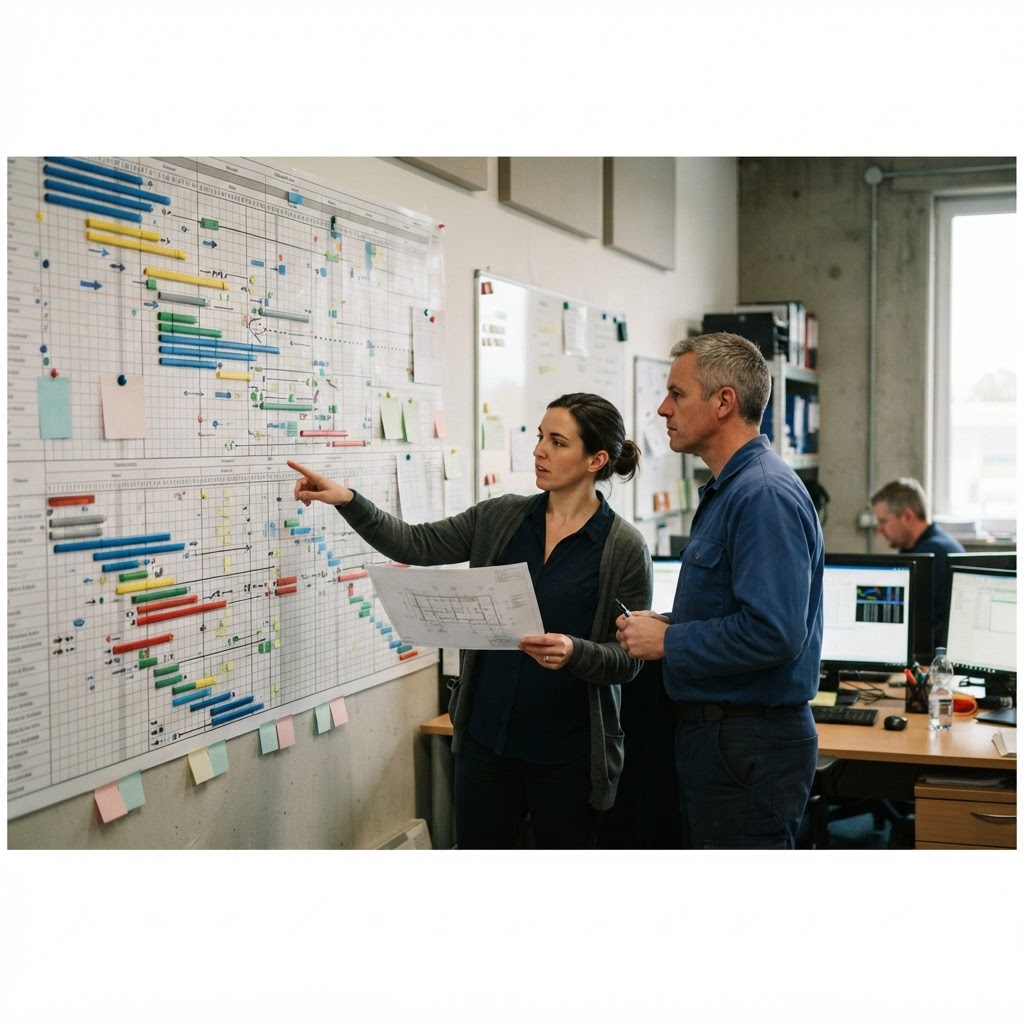
Integrated activity planning: one calendar for the whole asset
Drilling, maintenance, projects, inspections and shutdowns all compete for the same people, beds, cranes and process conditions. One integrated plan exposes the clashes before they happen.
The situation
Integrated activity planning (IAP) brings maintenance, projects, inspection, wells and operations activities into one plan across time horizons, resolving conflicts in resources, beds, permits and SIMOPS before they reach the field.
The problem
Each department plans its own work. When the plans meet on site, they clash: two crews need the same crane, a shutdown overlaps a drilling campaign, or bed space runs out.

What integration means
One plan that holds all significant activities, with shared resources and constraints visible to everyone. It is reviewed regularly by the people who own each activity.
Horizons
- Long-term: major shutdowns, projects and campaigns over several years.
- Annual: linked to budget and production forecast.
- Quarterly or rolling: the integrated, clash-checked plan.
- Short-term: the detailed two-to-six-week schedule.
- Execution: daily and weekly work with permits and logistics.
Making it work
- A single owner and a regular review meeting.
- Clear rules for changes inside the freeze window.
- Visibility of constraints: beds, cranes, vessels, process conditions, simultaneous operations.
- Measures of schedule compliance and the reasons for change.
Benefits
Fewer clashes, better use of shutdown windows, and less unplanned deferment from work that conflicts with production.
Key Takeaways
- Put all significant activities in one plan.
- Make shared constraints visible.
- Freeze the near-term plan and control changes.
- Measure schedule compliance and why plans change.
How Atticus helps
We help assets set up integrated activity planning, define planning horizons and run the review cycle.
Real-world examples
Piper Alpha — HSE public inquiry (1988)
On Piper Alpha, maintenance and production activities were not effectively coordinated across shifts and work groups. Integrated planning and SIMOPS control address exactly this risk.
Read the investigation / sourceclashing shutdown windows
A pipeline pigging campaign and a compressor overhaul were planned separately in the same week. The clash forced one to be cancelled at short notice, wasting mobilised resources and extending deferment.
If you get it wrong
- Unsafe simultaneous operations.
- Wasted crew time and mobilisation costs.
- Low schedule compliance and growing backlogs.
- Extended outages from poor sequencing.
Relevant standards
Links go to the publisher's official page (ISO, IEC, BSI, API, NFPA, HSE and others). Most standards must be bought from the publisher.
- ISO 55000:2024 — Asset management: vocabulary, overview and principlesiso.org
- ISO 45001:2018 — Occupational health and safety management systemsiso.org
- HSE HSG250 — Guidance on permit-to-work systemshse.gov.uk
Further reading
- Asset managementen.wikipedia.org
- IOGP Report 510 — Operating Management System frameworkidms.iogp.org
Take this briefing with you
A one-to-two page PDF summary: situation, diagram, key takeaways, consequences, examples and standards.