Sour gas basics: H₂S hazards and amine treating
Hydrogen sulphide is toxic at low concentrations and corrosive to many materials. Sour gas facilities are designed around containing it, removing it and protecting people from it.
The situation
Sour gas contains H2S and often CO2, which must be removed for safety, corrosion control and sales specifications. Amine units (MEA, DEA, MDEA and formulated solvents) absorb the acid gases. Materials must meet sour-service requirements such as ISO 15156 / NACE MR0175.
Why sour gas is different
H₂S is highly toxic, heavier than air and deadens the sense of smell at dangerous concentrations. It also causes sulphide stress cracking in susceptible steels. A sour facility needs careful materials selection, leak prevention, gas detection and emergency planning.

Removing H₂S
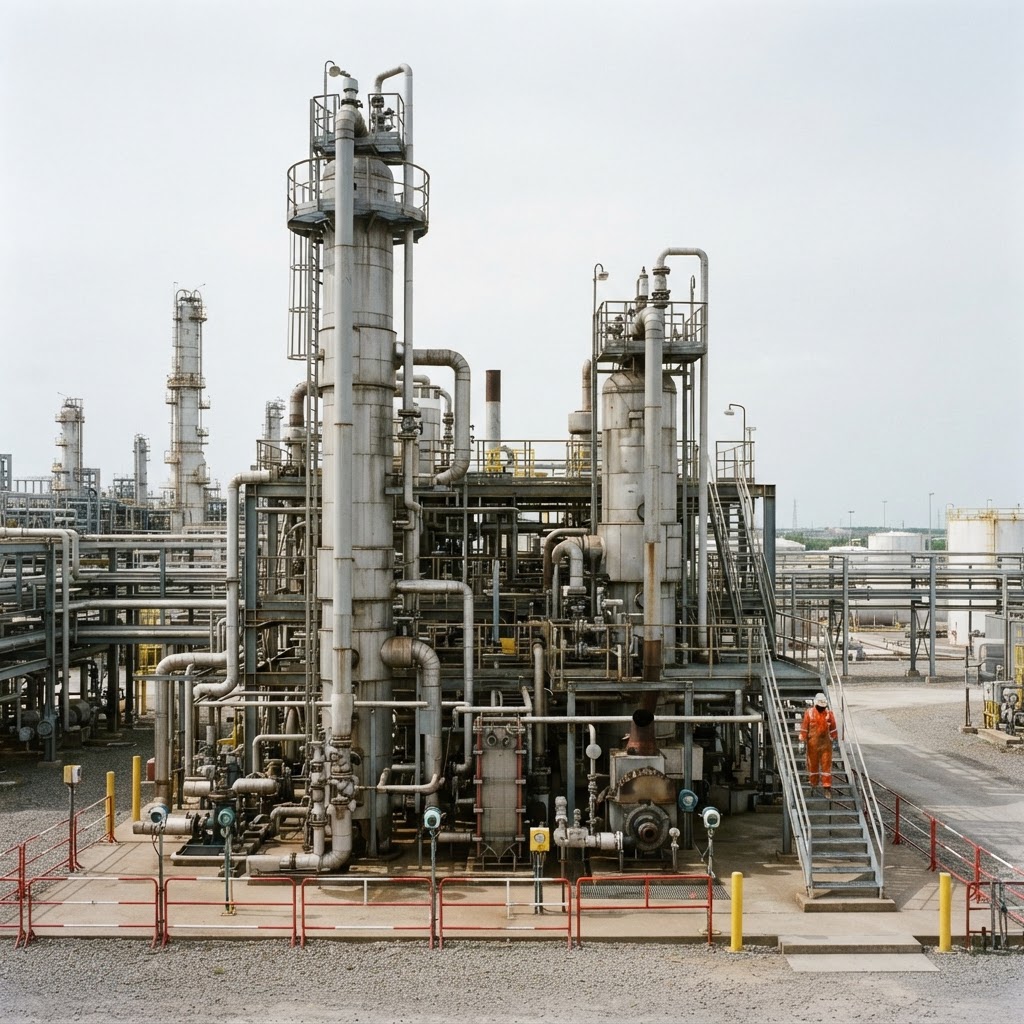
The most common process is amine treating. Gas flows up an absorber against a lean amine solution, which absorbs H₂S and CO₂. Rich amine is flashed to release dissolved hydrocarbons, then heated in a regenerator to strip the acid gas. Lean amine is cooled and returned.
Different amines suit different jobs. Some remove both H₂S and CO₂; others are selective for H₂S, which helps when CO₂ can stay in the gas.
What happens to the acid gas
Acid gas is either converted to elemental sulphur in a sulphur recovery unit, or compressed and reinjected underground. The choice depends on volume, sulphur markets, reservoir suitability and emission limits.
Design and operating watch-points
- Materials qualified for sour service throughout.
- Foaming, amine degradation and heat-stable salts.
- Corrosion in the regenerator and rich amine circuit.
- Gas detection, breathing apparatus and emergency response planning for both the plant and nearby communities.
People first
Training, H₂S awareness, personal monitors and rehearsed evacuation are as important as the process equipment.
Key Takeaways
- H₂S drives materials, detection and emergency planning.
- Select the amine for the job: total or selective removal.
- Decide early between sulphur recovery and acid gas injection.
- People-side controls matter as much as equipment.
How Atticus helps
Our team has worked on HPHT and sour gas developments. We support sour service design reviews, HAZOP, materials selection and emergency planning.
Real-world examples
Hazard context: H2S toxicity
H2S is highly toxic. At high concentrations it can cause collapse and death within a few breaths, and it deadens the sense of smell. Regulators such as OSHA publish exposure limits and guidance for work in sour areas.
wrong bolting in sour service
Carbon steel bolting that did not meet the sour-service hardness limits was fitted during a turnaround. The bolts cracked by sulfide stress cracking within months, causing a flange leak in a high-H2S area.
If you get it wrong
- Toxic exposure fatalities.
- Sulfide stress cracking and hydrogen-induced cracking of equipment.
- Amine foaming, losses and off-spec gas.
- Corrosion in rich amine and regenerator overhead systems.
Relevant standards
Links go to the publisher's official page (ISO, IEC, BSI, API, NFPA, HSE and others). Most standards must be bought from the publisher.
- ISO 15156-1:2020 (NACE MR0175) — Materials for H2S-containing environmentsiso.org
- OSHA — Hydrogen sulfideosha.gov
- API standards catalogue (API 520/521, 580/581, 618, 625, 650, 754 and more)api.org
- AMPP (formerly NACE) standardsampp.org
Further reading
- Amine gas treatingen.wikipedia.org
- Hydrogen sulfide — properties and hazardsen.wikipedia.org
- Sulfide stress crackingen.wikipedia.org
Take this briefing with you
A one-to-two page PDF summary: situation, diagram, key takeaways, consequences, examples and standards.